Live the Small Town Charm
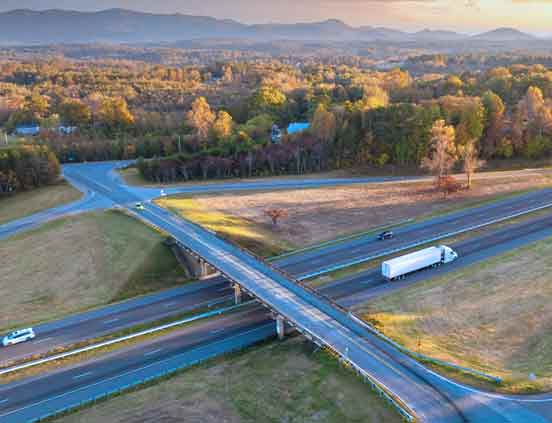
Enjoy the small town charm and a slower way of life in Berkeley County and live in close proximity to major metropolitan areas like Baltimore & Washington D.C.

Berkeley County lies in the Eastern Panhandle of what is now West Virginia. Originally part of Virginia, it became part of this state when it was formed in 1863. Berkeley County’s development has been deeply tied to its geography, local natural resources, and infrastructural investments.
Throughout its history, Berkeley County’s industrial evolution went roughly through the following stages:
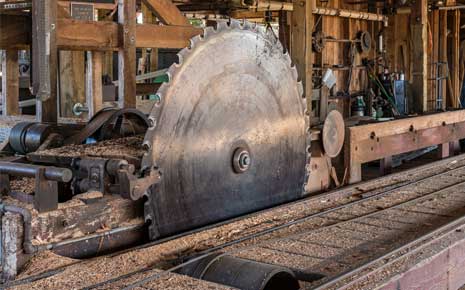
From Berkeley County’s earliest years, agriculture was dominant, and many local industries grew to support it, including grist mills, sawmills, and fulling and carding mills. These used water power from local rivers, and many historic districts are found alongside these creeks and waterways today. These include the Tuscarora Creek Historic District near Martinsburg, and the Mill Creek Historic District in Bunker Hill.
Bunker Hill itself developed as an industrial village under General Elisha Boyd. Its economic base included two mills, brick-making, a cooperage, and a store. The county’s limestone deposits also supported a quarrying industry.
Local processing tied to agriculture and natural resources was the foundation of industrial activity in the 18th and early 19th centuries. These early industries are still felt in Berkeley County today.
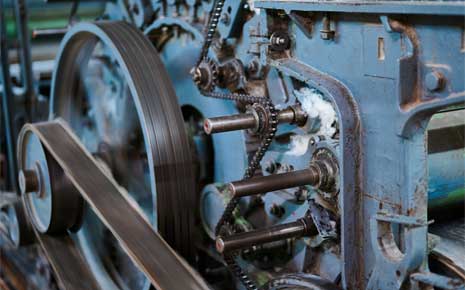
One of the most significant industrial chapters in Berkeley County is the rise of the textile sector, which is concentrated in Martinsburg.
As early as 1810, Berkeley County had a sizable water-powered textile industry, producing mixed cottons, cloth, and blankets. It was a leader amongst Virginia counties at the time. Around 1890, the Middlesex Knitting Company (later Interwoven Mills) in Martinsburg, was established. It is often cited as the first textile factory in the United States to be powered by electricity from the start.
Over time, Martinsburg became a major textile and garment manufacturing center. Other firms included the Martinsburg Worsted and Cassimere Company, and Crawford Woolen.
By the early to mid-20th century, a significant share of the local workforce was employed in textile or garment factories. However, the textile industry faced headwinds: changing technology (synthetic fibers), competition, shifts in raw material processing, and broader trends toward consolidation and offshoring. By mid-century, various companies began to fold or be absorbed.
By the latter half of the 20th century, textile employment had shrunk dramatically in West Virginia as a whole. By 2020, the number of full-time textile jobs in West Virginia was fewer than 30.
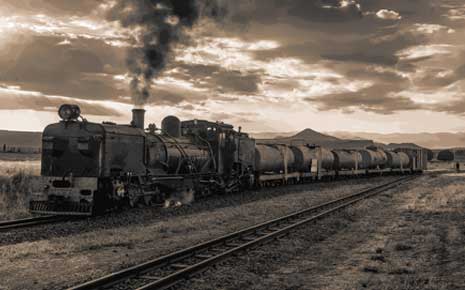
Railroads played a transformative role in Berkeley County, both in enabling industrial growth, and as industrial enterprises in themselves.
In 1842, the Baltimore & Ohio (B&O) Railroad arrived in Martinsburg, positioning the town as a maintenance and repair hub between Baltimore and Cumberland. The B&O built a roundhouse, machine shops, and associated industrial infrastructure as early as the 1840s.
During the Civil War, the railroad facilities were damaged, destroyed, or commandeered by both Confederate and Union forces. After the war, the roundhouse and shops were rebuilt.
The Martinsburg Roundhouse complex is now recognized as a National Historic Landmark and is notable for its cast-iron framed structure, believed to be the only surviving cast-iron framed roundhouse in the world.
Because the railroad facilities were major employers and drew ancillary industrial activity (suppliers, parts, maintenance), the railroad infrastructure had a multiplier effect on the local economy.
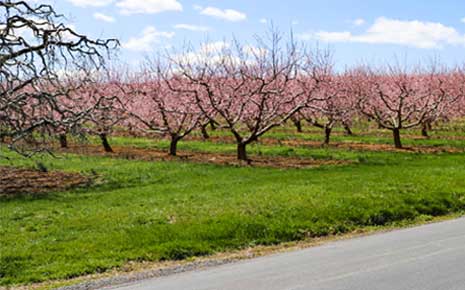
The earliest documented horticultural move in what is now Berkeley County, came in 1774, when George Washington leased 125 acres to William Bartlett for planting 100 peach trees and 100 winter apple trees. This is cited as one of the first deliberate orchard enterprises in the region.
By the mid-1800s, commercial orchard work was underway in the Eastern Panhandle portion of the Shenandoah Valley. The first orchard in the Eastern Panhandle is sometimes dated to 1851, in Gerrardstown, planted by William S. Miller, who is recognized as a key early apple grower in the area. Miller started with 16 acres, and eventually planted thousands of trees by the start of the Civil War.
The fruit industry in Berkeley County did not operate in isolation; it overlapped with industrial development in several ways:
Fruit is an important part of Berkeley County’s industrial history and culture today.

As the 20th century proceeded, Berkeley County’s industrial base diversified. Some of the major developments include:
Berkeley County is still the fastest-growing county in West Virginia. Its excellent location, low cost of living, and rich natural landscape attract residents and companies alike. The past 300 years are just a starting point for its bright future. Learn more about the region’s history through the Berkeley County Historical Society.